Is LinkedIn Still a Professional Network in 2026?
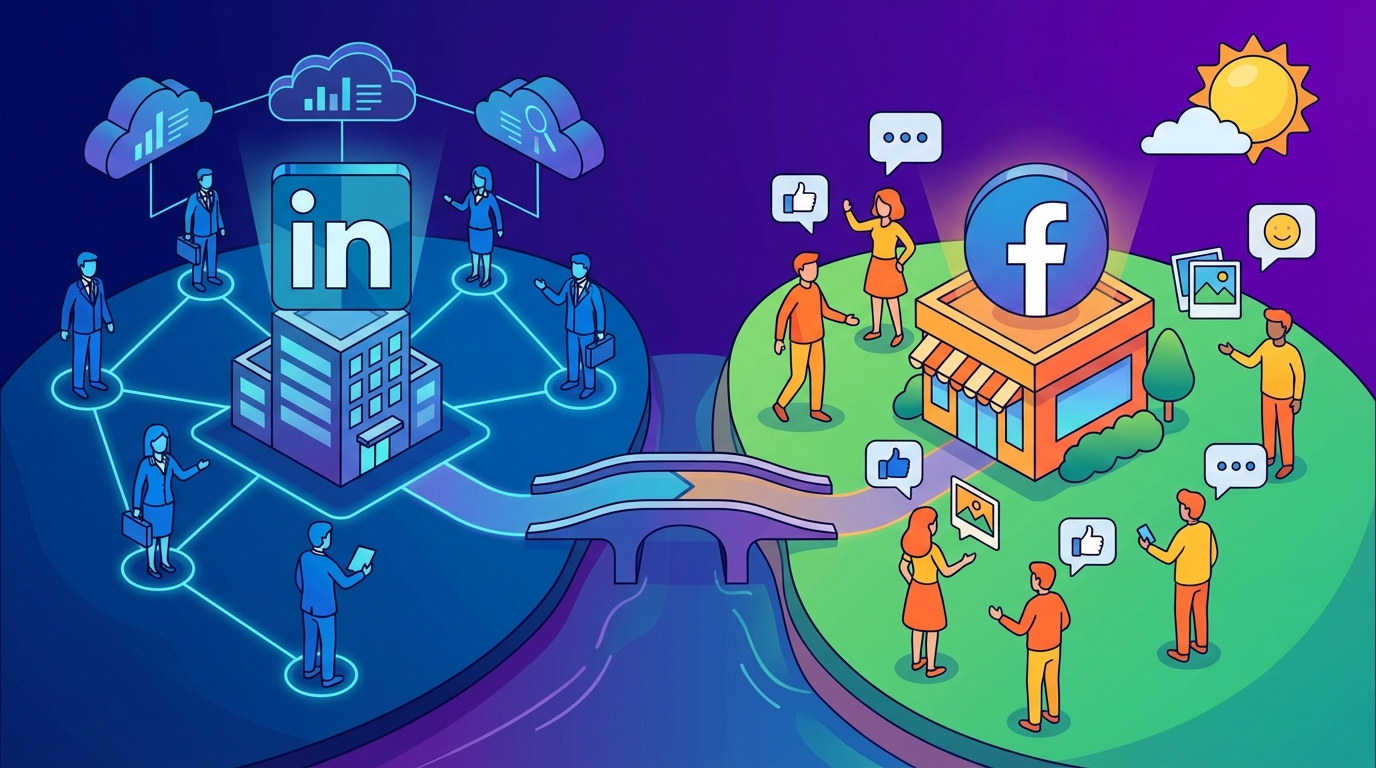
Is LinkedIn Still a Professional Network, or Has It Become Facebook With Ties? Open LinkedIn right now. Scroll for thirty seconds. Count how many posts are actually about professional expertise, industry insights, or genuine career development.
Is LinkedIn Still a Professional Network, or Has It Become Facebook With Ties?
Open LinkedIn right now. Scroll for thirty seconds. Count how many posts are actually about professional expertise, industry insights, or genuine career development. Now count the selfies with motivational captions, the "I was crying in my car before this meeting" vulnerability posts, and the humble-brags disguised as life lessons.
The ratio will disturb you.
I've been building content strategies on LinkedIn for years — for myself and for clients across B2B SaaS, consulting, and professional services. What I've watched happen to this platform over the past few years isn't subtle. It's a full-blown identity crisis. And if you're a creator, marketer, or professional trying to use LinkedIn strategically, you need to understand what's actually going on before you waste another quarter posting content that the algorithm has already decided to bury.
The Feed Doesn't Look Like It Used to — And That's Not an Accident
LinkedIn's feed has evolved significantly over recent years. The platform that once rewarded specificity and expertise now operates differently. You could post a thoughtful breakdown of an industry trend, get meaningful reach, and attract the exact people you wanted in your network. The platform rewarded specificity. It rewarded expertise.
That's no longer the primary driver.
What dominates feeds now is emotional content. Personal stories. "Life lesson" posts that could just as easily appear on Instagram or Facebook. The kind of content that generates quick reactions — likes, comments, shares — from a broad audience, not a targeted one. LinkedIn's algorithm has shifted toward engagement velocity. The faster a post accumulates reactions in its first hour, the more it gets distributed. Nothing generates fast engagement like emotion.
This creates a perverse incentive structure. A deeply researched post about supply chain optimization might get modest impressions. A post about how your kid's soccer game taught you about leadership gets significantly more. The platform is telling creators, explicitly through its distribution mechanics, what it wants more of.
The "Vulnerability Industrial Complex" Is Real
There's a specific genre of LinkedIn post that has exploded in recent years. You know it when you see it:
- A personal hardship or emotional moment
- A pivot to a business lesson that's only tangentially connected
- A call to action asking people to share their own stories
- Line breaks after every sentence for dramatic effect
This format works. It works extremely well from a pure engagement standpoint.
When the most effective content strategy on a "professional network" is to share personal struggles, the platform has stopped being a professional network in any meaningful sense. It's become a performance space where the currency is emotional resonance, not professional value.
I'm not arguing that vulnerability has no place in professional contexts. It does. Authentic leadership requires it. But there's a canyon-wide difference between a CEO honestly discussing a failed product launch and what they learned, versus someone manufacturing an emotional narrative specifically because they know the algorithm will reward it. The second version is content marketing wearing vulnerability as a costume. LinkedIn is drowning in it.
Why the Algorithm Shifted — Follow the Money
LinkedIn isn't making these changes randomly. The platform has a business model, and understanding it explains everything about why your feed looks the way it does.
LinkedIn makes money primarily through three channels: premium subscriptions, recruiting tools, and advertising. The advertising revenue is the growth engine. And advertising revenue depends on one thing above all else: time spent on platform.
Professional content — the kind that actually helps people do their jobs better — has a usage pattern problem for LinkedIn. People read it, extract the value, and leave. They might spend limited time on the platform. That's not enough ad impressions.
Emotional, personal, Facebook-style content keeps people scrolling. It triggers the same dopamine loops that make social media addictive. People react, they comment, they get into debates, they check back to see responses. Session times increase. Ad revenue follows.
LinkedIn looked at what made Facebook and Instagram enormously profitable and decided to import those mechanics. The professional positioning is still the brand promise — it's what makes LinkedIn's ad rates higher than other platforms, because advertisers believe they're reaching professionals in a professional mindset. But the actual product experience is converging with every other social feed. This is the tension that will define LinkedIn's next chapter: how long can you charge premium advertising rates for a "professional audience" when the content experience is indistinguishable from Facebook?
What's Actually Happening to Expert Content
Here's what I've observed across numerous accounts I either manage or closely monitor: genuinely expert content — technical breakdowns, data analysis, industry-specific insights — has seen consistent reach declines in recent years.
The pattern is unmistakable. A post that would have reached substantial audiences in the past now reaches significantly fewer people with the same follower count and engagement rate. The algorithm isn't just boosting emotional content; it's actively suppressing niche, technical content because it doesn't generate broad engagement.
Think about what this means for the platform's value proposition. LinkedIn's entire pitch to professionals was: this is where your expertise gets seen by the right people. If that's no longer true, what exactly is LinkedIn offering that a well-maintained blog or newsletter doesn't?
The professionals who built real authority on LinkedIn — the ones who attracted clients, job offers, and speaking engagements through genuine thought leadership — are increasingly frustrated. Many are migrating their best thinking to newsletters, podcasts, and owned platforms where an algorithm can't decide their expertise isn't engaging enough.
The Carousel and Format Arms Race
One area where LinkedIn still shows its professional DNA is in content format innovation. Carousels — multi-slide visual posts — have become one of the highest-performing formats on the platform. They generate significantly more engagement than plain text posts, and they tend to reward structured, educational content.
This is actually good news if you're a creator focused on delivering real value. Carousels force you to organize your thinking visually. They require effort, which creates a natural barrier against low-quality content. They tend to get saved and shared at higher rates than other formats, which signals to the algorithm that the content has lasting value.
But even here, the Facebook-ification creep is visible. The highest-performing carousels are increasingly the ones with bold, emotional hooks on the first slide. "I got fired and it was the best thing that happened to me" will outperform "7 SQL Optimization Techniques That Reduced Our Query Time" almost every time. The format is professional. The incentive structure pushing content within that format is not.
Who Benefits From LinkedIn's Identity Crisis
Not everyone loses in this shift. Some groups are thriving:
- Personal brand builders who prioritize reach over relevance. If your goal is maximum visibility regardless of audience quality, LinkedIn's current algorithm is your best friend.
- Coaches and course sellers who use emotional content as top-of-funnel. The vulnerability post leads to the DM, which leads to the discovery call, which leads to the coaching package. It's a proven funnel.
- LinkedIn itself, at least in the short term. Engagement metrics are up. Time on platform is up. These are the numbers that get presented to advertisers and Wall Street.
Who loses:
- Deep domain experts whose content is genuinely valuable but narrowly targeted
- B2B companies trying to reach specific decision-makers with relevant content
- Job seekers who thought LinkedIn was about professional merit, not content performance
- The platform's long-term credibility as a professional space
The Czech and Central European Angle
If you're operating in the Czech market or broader Central European space, there's an additional layer to this. LinkedIn adoption in the region has grown significantly, but the user base is still smaller and more professionally oriented than in the US or UK. This means the Facebook-ification effect is present but delayed.
Czech LinkedIn still has pockets of genuine professional discourse — particularly in tech, finance, and startup communities. But the trend lines are clear. The same content patterns that took over English-language LinkedIn are appearing in Czech feeds with a noticeable lag. The motivational posts are multiplying. The personal stories are getting more dramatic. The actual expertise is getting harder to find.
This creates a window of opportunity. If you're a Czech professional or company willing to consistently publish genuinely expert content right now, you're competing against a smaller pool of quality creators.
That window won't stay open forever.
So What Do You Actually Do About This?
I'm not going to tell you to "just post great content and the algorithm will reward you." That's a lie. The algorithm rewards what it rewards, and pretending otherwise is naive. Here's what actually works based on what I've tested and observed:
1. Use emotional hooks to deliver professional substance. This isn't selling out — it's pragmatism. Your first line needs to stop the scroll. Make it personal, surprising, or provocative. But then deliver genuine expertise in the body. Don't bait and switch into a generic life lesson. Actually teach something specific.
2. Invest heavily in carousels. They're the format most aligned with professional content delivery, and they still get algorithmic support. Build carousels that break down complex topics into visual, digestible slides. This is where tools like dedicated carousel creators pay for themselves — the format demands visual quality, and sloppy design undermines your credibility.
3. Build your email list from LinkedIn, not on LinkedIn. Treat LinkedIn as a discovery platform, not your home base. Every piece of content should have a path toward an owned channel — a newsletter, a community, a resource library. The algorithm can change tomorrow. Your email list can't be taken from you.
4. Engage strategically, not broadly. Comment on posts from people in your actual industry. Build relationships with the people who matter to your career or business, not the thousands who might like your motivational quote. LinkedIn's connection-based distribution still gives weight to your network's engagement.
5. Post consistently but don't chase virality. Regular, solid, expert posts will build more real authority than occasional viral vulnerability posts. The viral post gets you followers. The consistent expert content gets you clients, partners, and opportunities.
The Honest Answer to the Title Question
Is LinkedIn still a professional network? Technically, yes. The job listings are still there. The recruiting infrastructure still works. The B2B advertising targeting is still superior to any other platform.
But the content experience — the feed, the posts, the engagement patterns — is converging rapidly with Facebook. The incentive structures are aligned toward emotional, broad-appeal content. The algorithm rewards engagement velocity over expertise depth. The platform is optimizing for attention, not professional development.
LinkedIn is a professional network with a Facebook content layer on top. And the content layer is what you interact with most of the time.
The professionals who thrive on this version of LinkedIn will be the ones who understand both realities simultaneously: use the platform's professional infrastructure and targeting while adapting to its increasingly social content dynamics. Fight the algorithm and you'll be invisible. Surrender to it completely and you'll become another motivational poster account with no real professional value.
The sweet spot is narrow. But it exists.
Written by
Jiri Zmidloch
Founder of Carousel Gate and Process Gate AI. Expert in AI-powered content creation and LinkedIn marketing.
Ready to create stunning carousels?
Turn your ideas into professional LinkedIn carousels with AI. Choose a template, pick a style, and let AI do the rest.
Related Articles
B2B Marketing Trends: Build Trust in an AI-First Era
The Trust Paradox Nobody Saw Coming A B2B SaaS company I know tripled their content output using generative AI tools. Blog posts, whitepapers, LinkedIn carousels, email sequences—everything scaled beautifully. Traffic climbed.

Why Do People Share Personal Stories on LinkedIn?
Why are professionals increasingly sharing personal stories on LinkedIn instead of corporate updates? An analysis of the trend, data, and psychology behind the virality of intimate posts on the world's largest professional network.
LinkedIn Carousel Design: 7 Formats That Stop the Scroll
The Carousel That Changed Everything A B2B operations consultant posted the same content twice on LinkedIn. First as a long-form text post — well-written, thoughtful, packed with insight. It got modest engagement.